
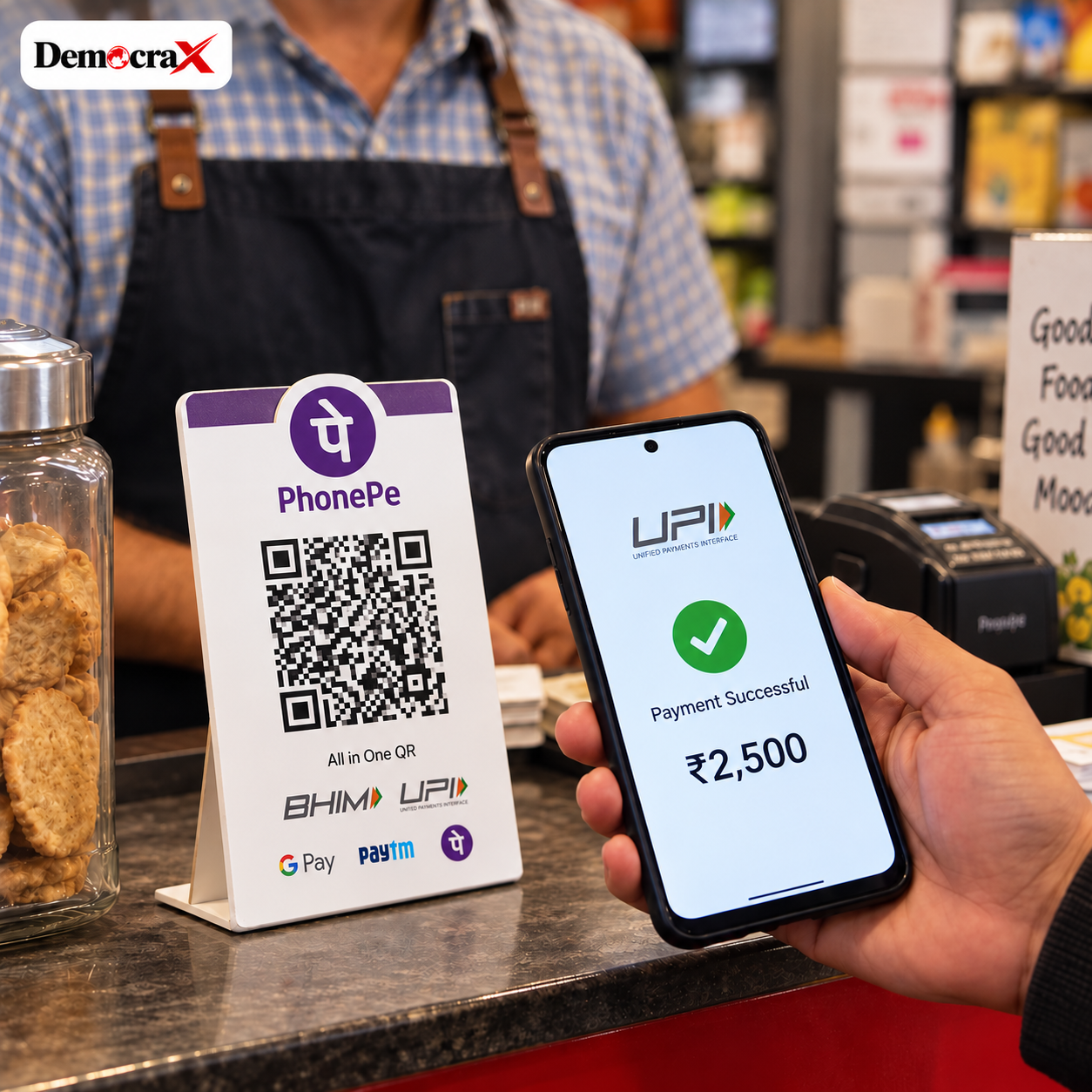
To millions of Indians who use a QR code without even giving a second thought, the introduction of a new regulation in UPI will definitely seem worrisome, as any transaction over ₹2,000 will incur a 0.4% Merchant Discount Rate (MDR) from October 15. However, one must remember that there is a catch to the news — UPI users do not have to pay the said MDR fee.
The newly introduced regulation by the National Payments Corporation of India (NPCI) covers only some specified Person-to-Merchant (P2M) transactions. According to the Ministry of Finance, MDR is charged within the payment ecosystem and cannot be levied on customers.
UPI Charges Above ₹2,000: What Actually Changes?
Effective October 15, 2026, payments made to eligible merchants exceeding ₹2,000 will incur an MDR charge of 0.4%. The MDR charge on payments of ₹75,000 and more will cap at ₹300 per transaction.
For instance, if you make a payment of ₹5,000 to an eligible merchant via UPI, ₹20 will be incurred as an MDR charge — but note that the MDR charge of ₹20 is not a fee deducted from your bank account.
It is also worth noting that the government says that MDR is neither a tax nor any government revenue but an allocation among UPI ecosystem participants.
Will UPI Still Be Free for Users?
Yes. The UPI transactions among individuals, which includes sending funds to other people like friends, family members, or personal accounts, will be free irrespective of the amount of money being sent.
The merchant transactions till an amount of ₹2,000 will also be free. According to the government, approximately 96% of the P2M transactions will be unaffected by this move, and even the small businesses getting an amount of ₹1 lakh or less per month through eligible P2PM QR arrangements will have to pay zero MDR.
For those users who wish to know about the payment infrastructure in India, the Technology part of DemocraX will continue its reporting on technological and digital economy matters.
Which UPI Payments Get the ₹5 Flat MDR?
Some selected and marginal industries will be covered under a different arrangement. Payments exceeding ₹2,000 to railways, telecommunication, insurance, fuels, agriculture inputs and other specified sectors will be charged a ₹5 flat MDR rather than the 0.4%. There will be another separate MDR of 0.02% for capital market transactions, capped at ₹300.
Why Has UPI Introduced MDR Now?
UPI has reached a very large scale. It was responsible for 2,451 crore transactions worth ₹29.9 lakh crore in the month of August 2026 alone, according to Ministry of Finance FAQ. The government says the new business model is meant to fund infrastructure, cybersecurity, fraud prevention, innovations and customer services.
This move comes after many years of no MDR on merchant payments. Hence, it is significant not because now consumers have to pay for using UPI but because the economics of India’s most popular digital payment system are about to change.
For further updates in this regard related specifically to India, one can refer to DemocraX’s India section, whereas general economic news is published under DemocraX Business.
Conclusion: From October 15, MDR will be applicable for larger UPI transactions by eligible merchants; however, customers would continue to enjoy UPI services free of any transaction fee. Merchants have been asked not to charge the customers for the same.
References: Ministry of Finance – UPI MDR FAQs | Press Information Bureau – UPI MDR clarification