

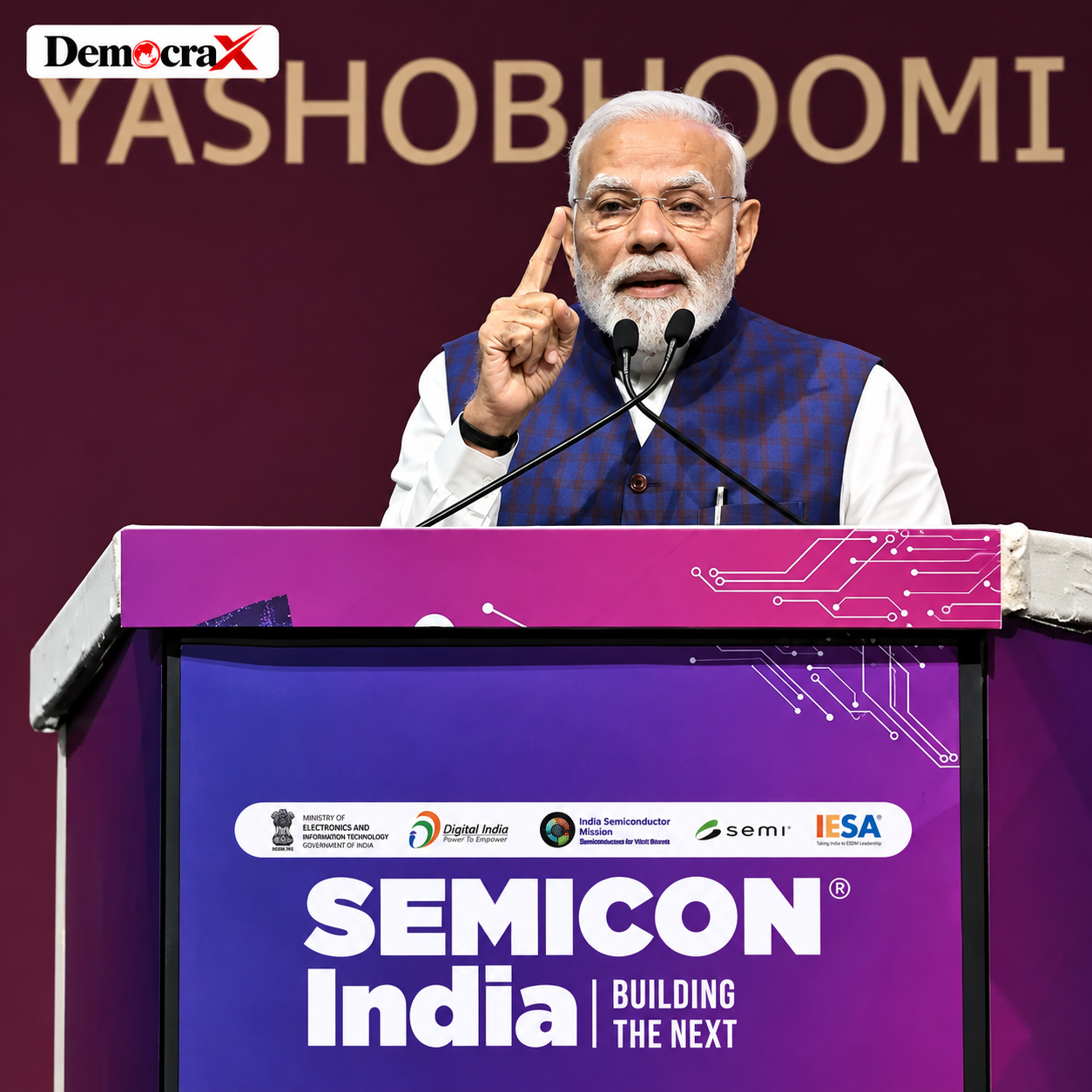
The story of India’s semiconductor industry is entering a more matured stage now. Prime Minister Narendra Modi will inaugurate SEMICON India 2026 on September 17 in Yashobhoomi, New Delhi, where the three-day event will emphasize India’s growth from being a heavy technology consumer to playing a vital role in the global semiconductor value chain.
It is crucial because SEMICON India 2026 follows in the heels of the Indian government announcing its next phase of semiconductor plans, Semicon 2.0, with a staggering budget of ₹1,27,500 crore.
SEMICON India 2026: What will happen on September 17?
This year’s SEMICON India is set to take place from September 17 to 19 under the theme “Silicon to Systems: Building the Ecosystem.” Over 500 exhibitors, 243 foreign exhibitors, and 150+ speakers and delegates from over 40 countries are likely to attend the event.
The Semicon 2.0 policy session will be held on the first day, after which discussions will be held on manufacturing, artificial intelligence, data centers, automotive and advanced packaging.
Official event details: SEMICON India 2026
Why the PM’s visit to SEMICON India is important
The country’s visit to the technology expo means much more for India.
The government, through the Semicon 2.0 strategy, plans to focus on six different aspects, including chip design, machines and material, new fabs, ATMP/OSAT packaging, research and development and talent development.
This goal is also related to the overall technology strategy of the country. In the latest study, DemocraX analyzed the AI governance in India and its relevance to global technology standards, which is one of the major questions concerning the development of technological capabilities and influence of India.
India’s Semiconductor Drive Has Passed Policy Phase
There is a reason why this year’s event attracts much attention within the industry. According to SEMI, there are twelve semiconductor projects that have already been approved within Semicon 1.0, and three of them are already in production. This indicates that the semiconductor drive of India is slowly but steadily transitioning from policy-making into actual production.
However, the production of chips involves many other factors. Availability of reliable energy, water, raw materials, trained workers and infrastructure will be relevant. The DemocraX research on the manufacturing transformation in India and South Asia explains the significance of infrastructure and energy capabilities in such cases.
The Real Test for India
The true test following SEMICON India 2026 will not simply involve the number of investments made. Instead, it will center around the ability of India to convert its massive policy push into a competitive, reliable, and innovative semiconductor industry.
For this reason, PM Modi’s September 17th visit signals something greater: India is looking to go beyond just participating in the global electronics marketplace to actually becoming a vital participant in it.
Want to stay updated on the biggest stories shaping India and the world? Explore more on DemocraX
