
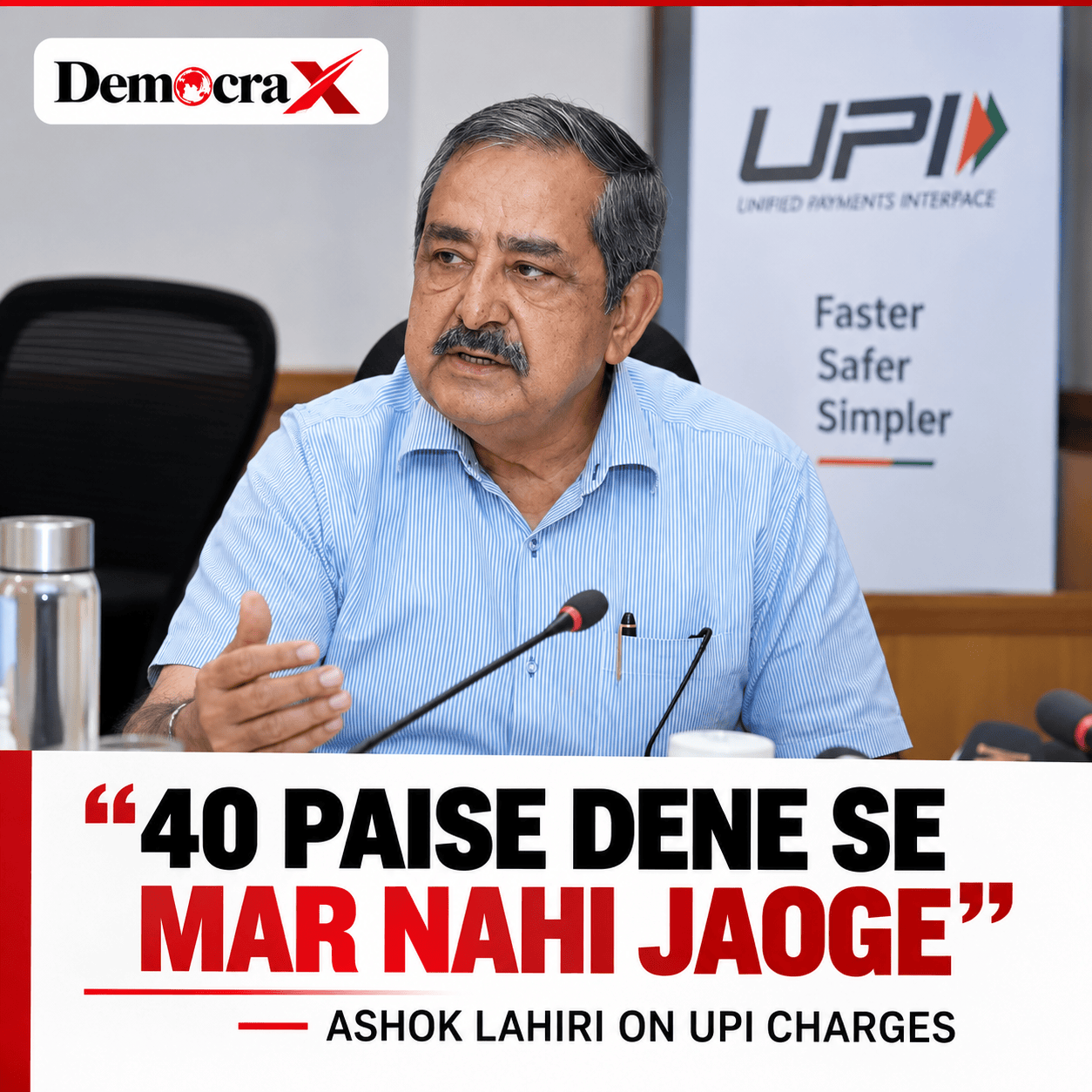
“40 पैसे देने से मर नहीं जाओगे” A remark by the Vice Chairman of NITI Aayog, Ashok Kumar Lahiri, on the proposed UPI Merchant Discount Rate has raised an even larger discussion – not just on the proposal, but also on how senior public officials should speak when they discuss policies impacting common Indians and small businessmen.
Addressing the proposal on the new UPI MDR policy, Lahiri said that digital transactions can’t continue to rely upon government subsidies forever. He cited the example of 40 paise for each ₹100 and asked if this was enough to affect a businessman in any way. He also mentioned that it was less than the charges levied for certain facilities like cheque books. Lahiri added that these were just his personal views and did not represent NITI Aayog.
Ashok Lahiri’s UPI Comment: Why Did It Upset People?
This is more about how 40 paise will feel when the payer is a small-time shopkeeper operating on very narrow margins.
Specifically, Lahiri contended that a kirana shop would never drop the use of UPI just because of such a small fee.
But retailers have come up with another worry here. The Retailers Association of India has warned that added costs of transactions will pose a problem for businesses running on such tight margins that may even encourage some traders to prefer cash.
This explains quite a bit of the public response. The matter at hand is not just a question of 40 paise on ₹100 but also the ultimate recipient of this charge.
What Does the New UPI Rule Actually Say?
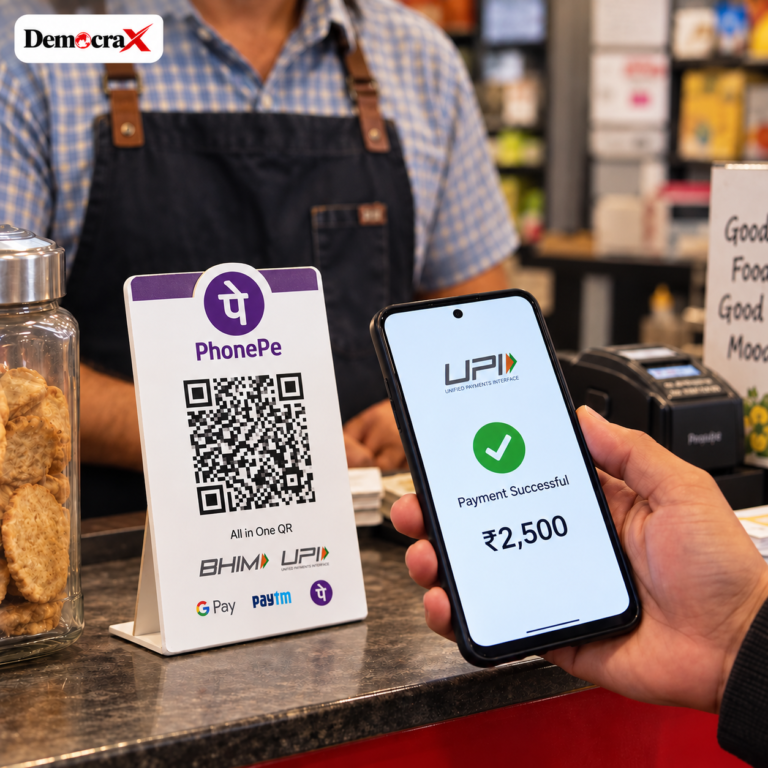
From October 15, 2026, there will be an imposition of a 0.4% MDR on certain designated merchant UPI transactions above ₹2,000, with some exceptions and caps. However, person-to-person UPI transactions will be free, and the government says that the consumer should not bear the MDR charges directly.
Also, the Ministry of Finance has directed banks to ensure that the merchants do not pass the MDR charges onto the consumers, while UPI app platforms cannot impose any hidden fees.
Thus, what matters more for the people is indirect: would the increased merchant costs ultimately reflect in prices, payment methods, or going back to cash? As per Reuters, these questions have been raised by the critics.
Should a Senior Officer Use Such Language Like “40 पैसे देने से मर नहीं जाओगे”?
This is where the debate shifts to one about communication more than economics.
An official responding on behalf of the policy can rightfully point out that the percentage of 0.4 is relatively small and that the UPI network comes at some operating cost. But phrases like “40 पैसे देने से मर नहीं जाओगे” might come off as callous for those who are concerned about increasing costs faced by businesses and households.
Such criticism has been made in the reporting of the comment, where the comment itself was labeled as controversial in headlines.
Yet the larger point being made by Lahiri is that the digital payment network in India requires a sustainable financing model and not permanent government subsidies. This is a policy argument that is open to criticism regardless of whether people agree on the percentage or the way the comment was made.
Thus for ordinary Indians, the question at stake is much larger than the controversial phrase: “If UPI is the daily payments network of India, how do you share the cost without putting an additional burden on small businesses and consumers?”
Want to stay updated on the biggest stories shaping India and the world? Explore more on DemocraX
Official clarification: Ministry of Finance / PIB: UPI Continues to Remain Free
Detailed reporting: Moneycontrol: Ashok Lahiri on UPI MDR