

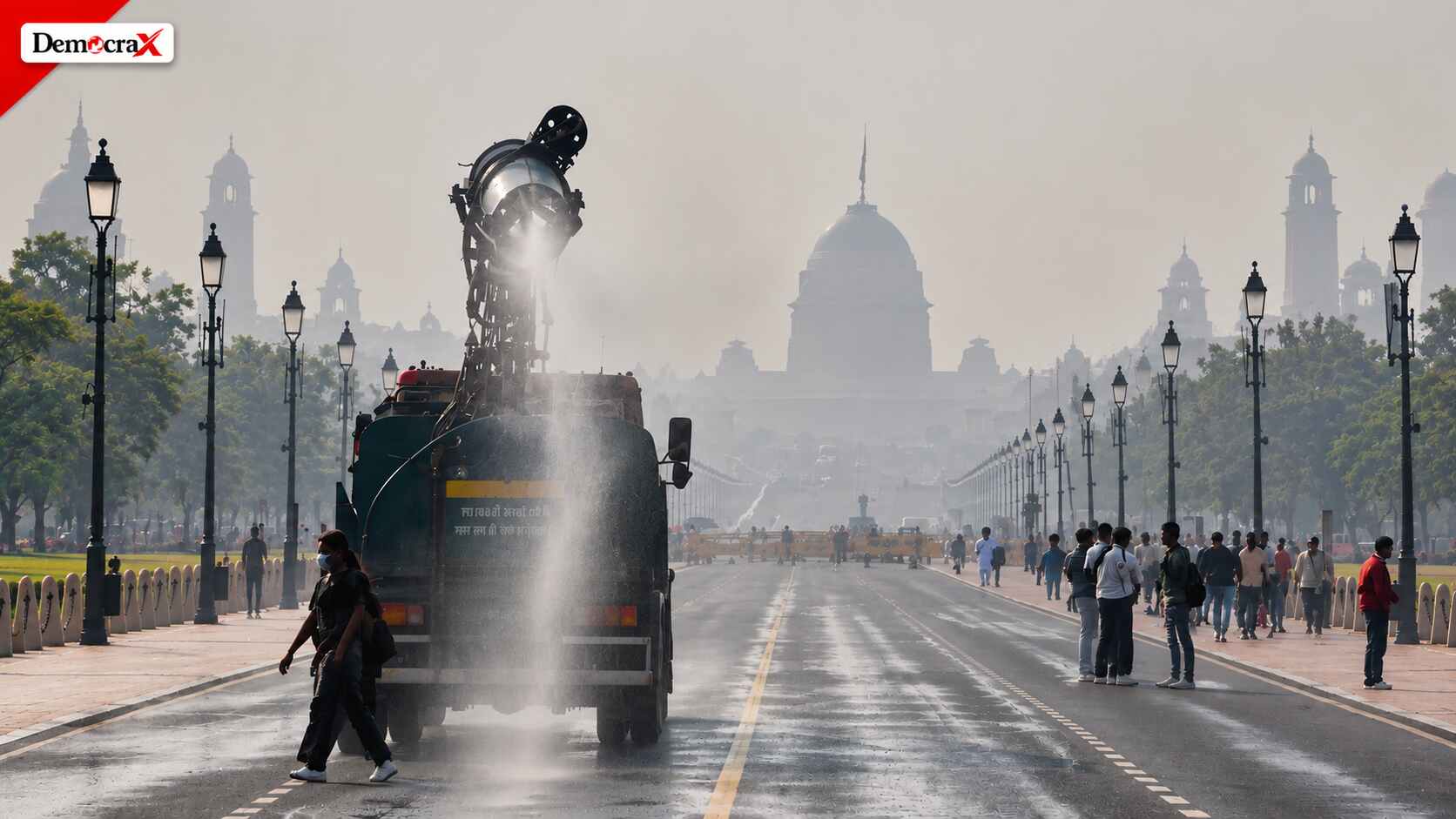
Delhi air pollution is again making headlines as CAQM has revised GRAP for Delhi-NCR before winter season. Some restrictions have been brought in the early stages, which allows authorities to take actions immediately after seeing air pollution levels deteriorate, unlike previous plans where action could be taken only when pollution reached alarming levels.
Delhi Air Pollution: What’s new in the updated GRAP?
Approved by CAQM on September 28, the updated plan consists of 48 action points across four stages. Dust control measures, waste management measures, and transport-related measures have been re-categorized in the plan, and restrictions on inter-city buses and diesel generator sets have been shifted from Stage II to Stage I.
Some important changes made in the updated GRAP include restrictions applicable on buses from Stage I to specified inter-state buses from eight states, including cleaner-fuel compliant vehicles. Restrictions on old BS-III petrol and BS-IV diesel light motor vehicles will now apply in Sonipat, along with other districts.
Not all measures, though, are operational now. GRAP measures are activated depending upon the air-quality stage declared by CAQM.
Current air quality in Delhi: Is the air quality getting worse?
The air quality measurements may vary depending upon the air-quality monitoring network and air quality index used. As per IQAir, the US AQI⁺ of Delhi was 166 on September 30, at 4:30 am, and the primary pollutant was PM2.5. This is not the same index used in India’s CPCB AQI; hence, the values cannot be directly compared. People can access the information from official CPCB station-wise air-quality reports.
What is the impact of the new GRAP on the citizens of Delhi?
With winter approaching, the revisions make sure that preventive measures are taken in time – emissions from vehicles, dust during construction work, road cleaning, and garbage management. The real proof of the pudding, however, lies in its implementation.
Complete revised schedule can be accessed at the official website of the CAQM. For details on the latest changes, refer to the Indian Express article about Delhi’s winter pollution measures.
Cleaner air for residents of the Delhi NCR region is not an issue that appears only during winters. This relates to travel, work outside, children, and patients suffering from respiratory diseases. The revised plan describes actions that authorities should take. Their implementation will decide the outcome.
Want to stay updated on the biggest stories shaping India and the world? Explore more on DemocraX
